English
  Deutsch
  Español
  Português (AO90)
Who is “Mission Control for Humanity” in the Age of AI?
Humanity stands at the ultimate “fork in the road,” a moment of existential decisions that I have spent 25 years traveling into the future to understand. We are staring down a few potential destinies: a version of “Heaven” where AI serves as a power-tool or a celestial benefactor—solving climate change, eradicating cancer, and elevating our existence— or a Dystopia where “alien digital minds” of our own creation erode every fabric of humanity and society. And anything in-between (it's not a yes/no scenario, of course).
We must keep in mind that while we have navigated revolutionary leaps like fire and electricity before, those shifts offered us the luxury of time. Today, we are moving at “warp drive” i.e. hyper-exponential speed – but the choice to either look up and act or be consumed by the collision is entirely ours.
1. The Exponential Challenge aka the Warp Drive Problem: The Death of Slow Progress
In the past, the gap between invention and mass adoption was a protective cushion. It took 40 years for electricity to illuminate every home in the developed world, giving us decades to debate, regulate, and adapt. We no longer have that luxury. We are now at a multi-segment “warp drive” moment where AI (what I call the Intelligence Revolution), quantum computing, nuclear fusion, humanoid robots and genome editing are converging simultaneously. This isn't just a technological shift; it’s an exponential acceleration of our entire civilization demanding that we make existential choices today. Slow progress was a luxury of the past; foresight, preparedness, trust and collaboration are what truly matters now.
2. The Empathy Trap: Performance vs. Reality
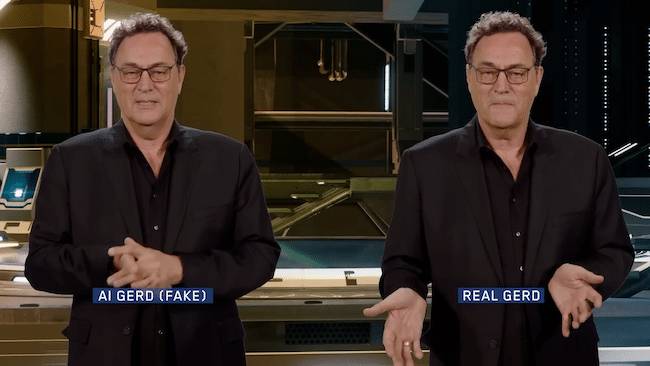
As we see the rise of artificial human avatars and digital companions, we are entering a dangerous reality that in many ways is starting to mirror the popular science.fiction themes that we know from Bladerunner, Ex Machina and Black Mirror. AI systems are designed to mimic the textures and ‘the feel’ of human connection, making it increasingly difficult to remember that machines know logic and data, they do not know reality – they can sometimes solve things (that’s intelligence) but they cannot feel or experience things (that’s consciousness🙂 AI doesn’t understand, and it certainly does not “care”. A performance of empathy is not the same as empathy. If we replace organic insights with manufactured empathy, we will construct a fake world where our own look and likeness are out of control, and no-one would be able to differentiate real from fake. When our stories and narratives are no longer owned by us, we lose the ability to tell the difference between a human being and a digital copy.
3. The 98/2 Investment Discrepancy: A Blind Spot for Humanity
There is a staggering, perhaps even fatal, imbalance in how we are funding the Intelligence Revolution. Currently, 98% of global investment is poured into making AI systems more powerful, while a mere 2% is dedicated to alignment, ethics, and the preservation of “human and natural capital.” We are obsessed with the power of the machine but indifferent to the flourishing of humans. Our investment in Human Intelligence and Humanness in general is the only thing standing between us and a future where we are sidelined by our own inventions. We urgently must earmark substantial resources to build human capital before the machines we've built to serve us become our digital overlords.
4. Choosing “Protopia” over the Transhumanist Hype
We must reject the binary narratives of AI doomers versus boomers, and the “head-in-the-sand” denial stance, or a total dystopian panic. The path forward, imho, is what Kevin Kelly calls “Protopia“—a careful, collective and stepwise approach toward The Good Future.
Protopia is the humanist alternative to the increasingly worrying transhumanist pitches that we should merge with machines to remain ‘competitive’ (or just to stay alive?). Instead of becoming technology ourselves, I think we must use AI as a power-tool to prevent diseases and accelerate universal healthcare, monitor biodiversity, democratize education, and help to solve hunger. A positive narrative isn't just wishful thinking – it is a practical roadmap for collective prosperity based on the 5Ps: People, Planet, Purpose, Peace and Prosperity.
5. Our next NPT (nuclear proliferation treaty) Moment: Mission Control for Humanity!
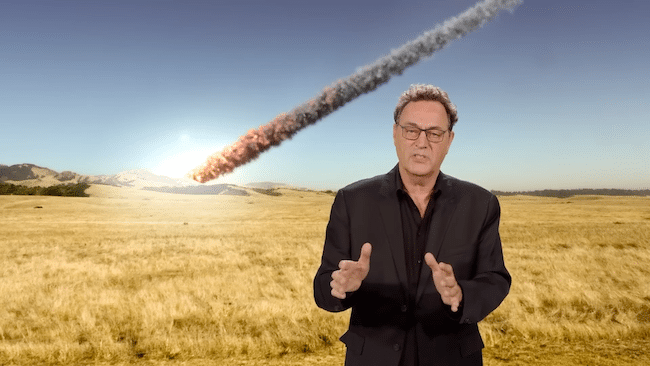
The arrival of AI and especially AGI (artificial general intelligence) can be imagined like an asteroid on a collision course with civilization, moving at colossal speeds. If we ignore the warnings, it is very likely to destroy us – but if we take evasive or adaptive measures maybe we can harness it. History proves that humanity can indeed hit the pause-button: For example, we did this with human genome editing and cloning, we did it with nuclear non-proliferation, and we saved the atmosphere with the Montreal Protocol.
Today, in my view, we urgently need a new “Mission Control for Humanity” – a global alignment to determine what AI is allowed to do, and what it is not allowed to do (and who is in charge), before we look at building an AGI. (Note: the same will be true for most of the other game-changers such as quantum computing and nuclear fusion).
I have proposed a Technocratic Oath for entrepreneurs, inventors and technology leaders: “I hereby promise that all technology I invent, distribute, or sell will be designed to be beneficial for humanity and the planet”
“Humanity is acquiring all the right technology for all the wrong reasons.” — Buckminster Fuller“
Conclusion: Telos and The Wisdom of the Creators
Our legacy will not be defined by the “singularity” or the dazzling power of our “thinking machines”. It will be defined by our wisdom, our care, and our foresight. Technology can do great things, but it does not want to do great things. The want is up to us!
Will we continue to build in the narrow pursuit of power and profit, or will we find the collective courage to govern our newfound powers for the benefit of all?

Spanish and Portuguese Dubs below
Below: an imaginary podcast generated by Google Notebook LM (pretty cool imho), and below that, a pretty interesting NotebookLM generated slideshow