English
  Deutsch
  Español
  Português (AO90)
My 10 year-old framework on the future of technology, digital ethics, androrithms and The Good Future of Humanity line up beautifully with Pope Leo XIV’s recent, historic encyclical Magnifica Humanitas. I am not religious (or catholic) but it is really fascinating to see how my core concepts run completely parallel to the moral warnings emerging from the Vatican, at this moment.
New: the FT on ‘the pope disrupts silicon valley‘ (gift link)
“We are a desire, not an algorithm” – Pope Leo XIV, May 14th, 2026
Here is a simple comparison:
1. “Hellven“: The Fork in the Road
- My Vision: I have long argued that we are at a “fork in the road” moment. Technology itself could lead us to “Heaven”—solving climate change, cancer, and energy crises—or it can lead to “Hell” if left entirely to unchecked commercial monopolies. I call this tension “Hellven.“
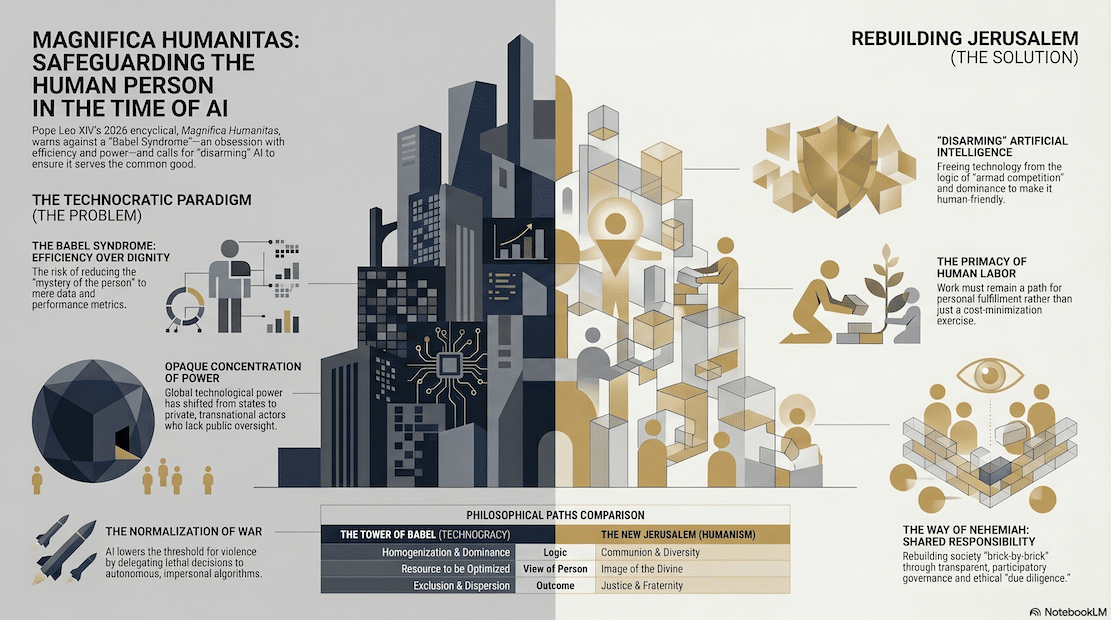
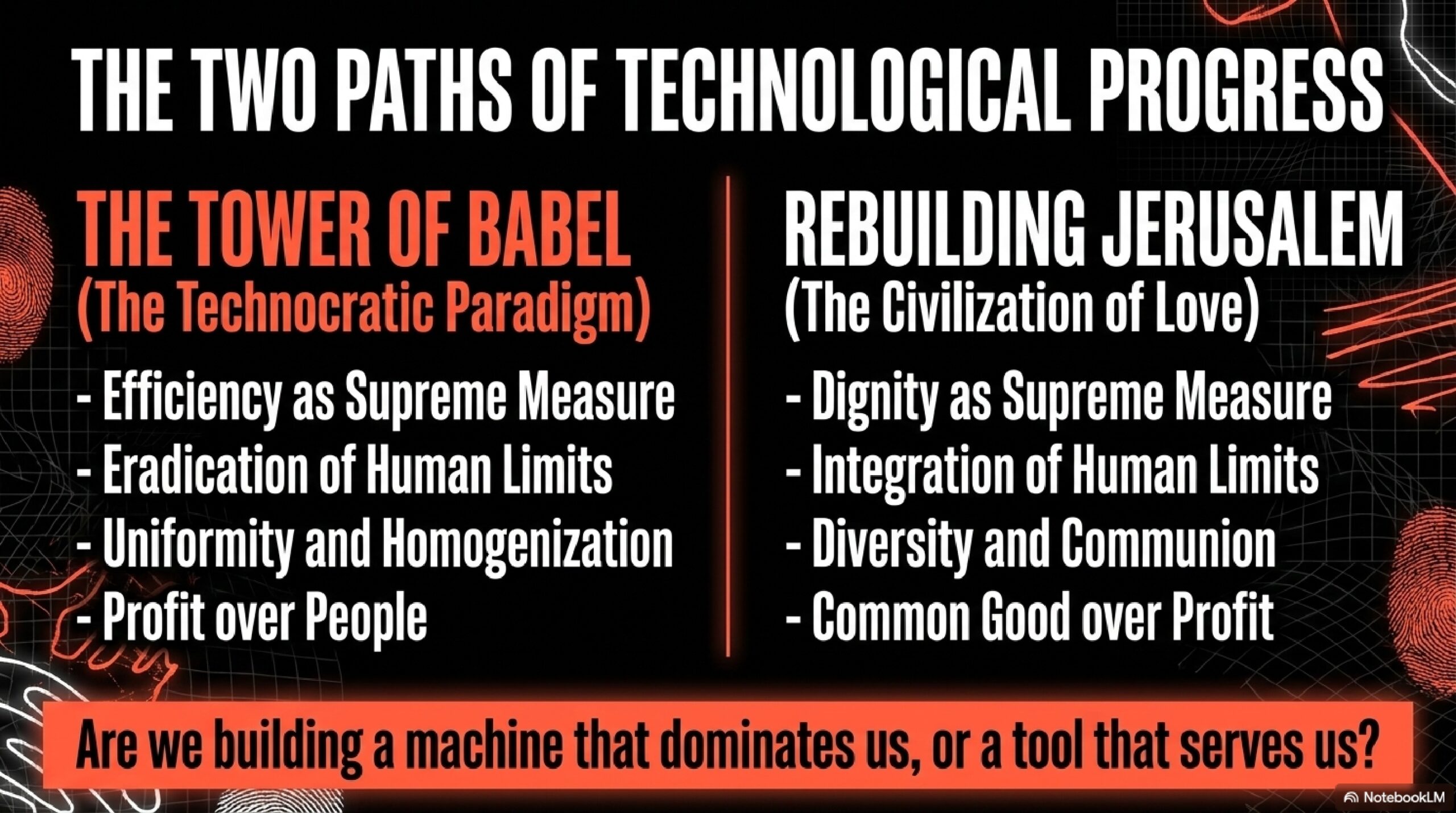
- The Pope’s Stance: Leo XIV mirrors this precisely using biblical imagery. He warns that humanity faces a pivotal choice: either construct a new Tower of Babel (a grandiose, hyper-efficient, but ultimately dehumanizing technocratic project) or build Jerusalem piece by piece (a human-centered project of shared responsibility).
2. “Embrace Technology, But Don’t Become It”
- My Vision: A cornerstone of my philosophy is that technology is a magnificent tool, but it lacks existence, agency… a soul. I emphasize that while machines excel at computational data processing, humans must protect what makes them unique: creativity, empathy, and ethics. I warn against the dangers of cognitive outsourcing—atrophying our own critical thinking by relying completely on chatbots.
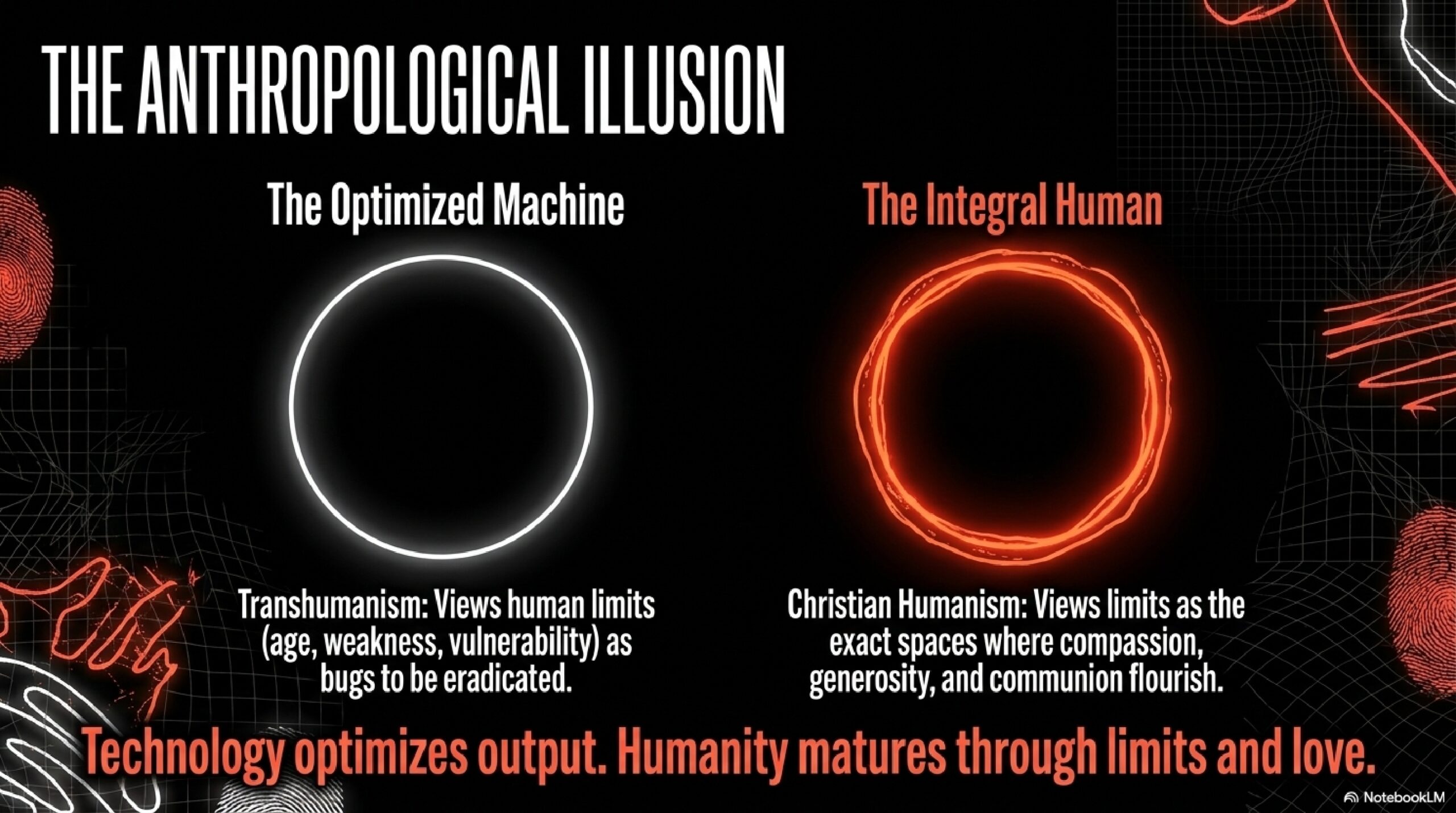
- The Pope’s Stance: The Pope writes that AI merely “imitates” human functions. He notes that AI can never truly know love, friendship, or responsibility because it lacks a body, a soul, and an inner life. He similarly warns that when technology weakens our critical sense, our inner freedom and peace are placed at severe risk.
3. Disarming AI: Calling out the Monopolies
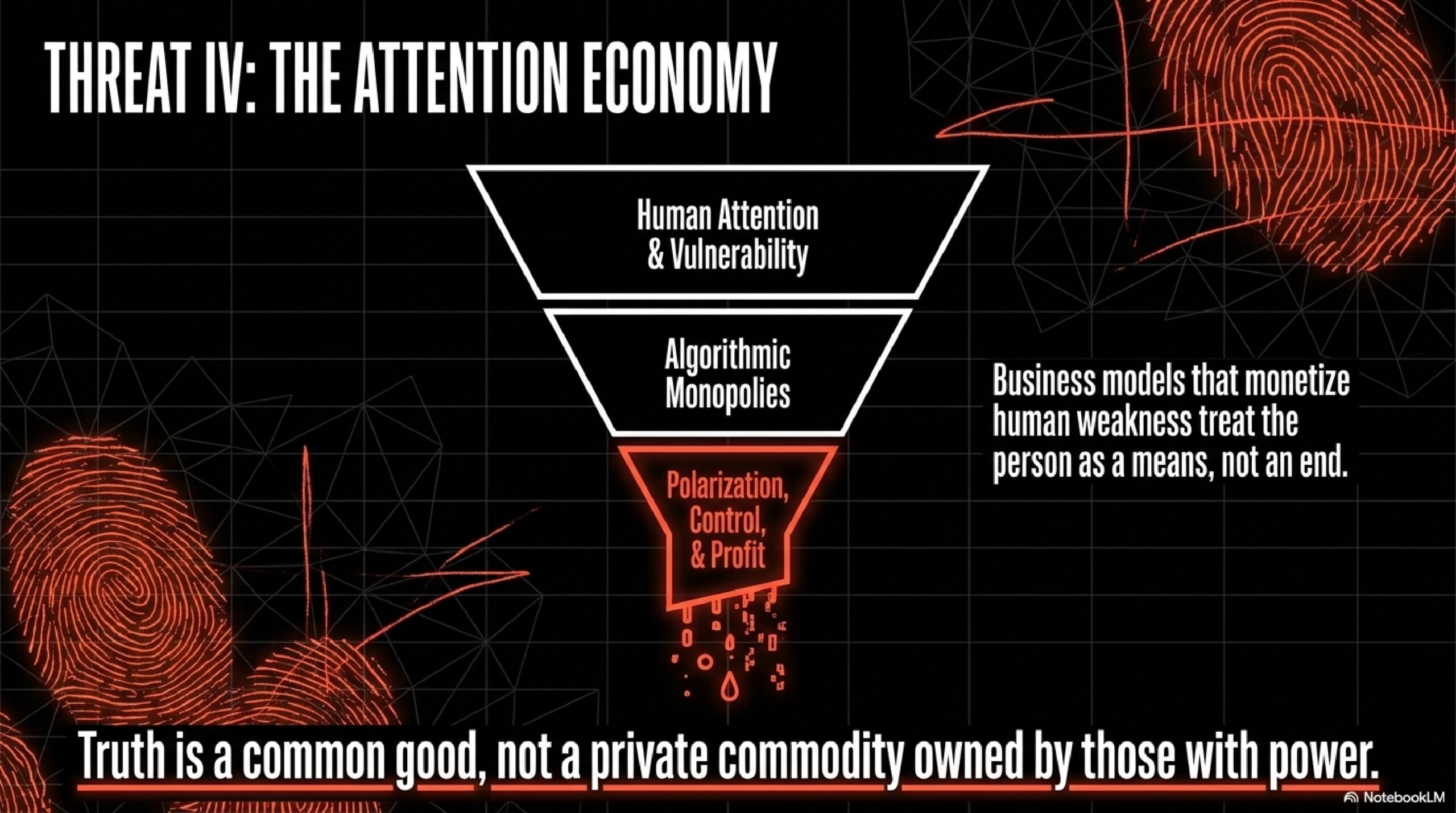
- My Vision: I have frequently highlighted the massive risk of allowing just two or three private Silicon Valley giants to reshape humanity, operating purely under commercial and geopolitical pressures. I advocate for global “red lines” and strict regulatory frameworks to keep power distributed.
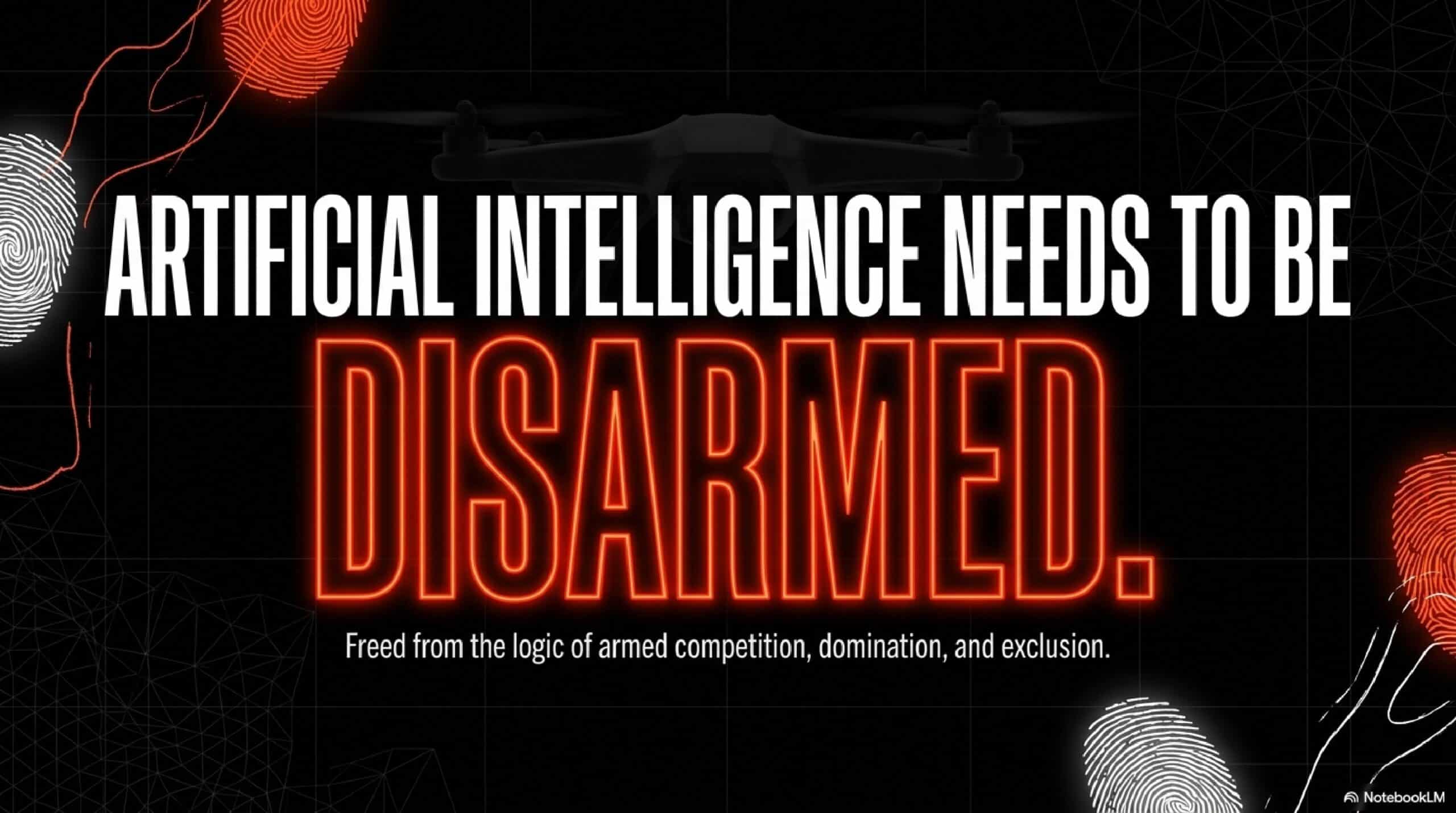
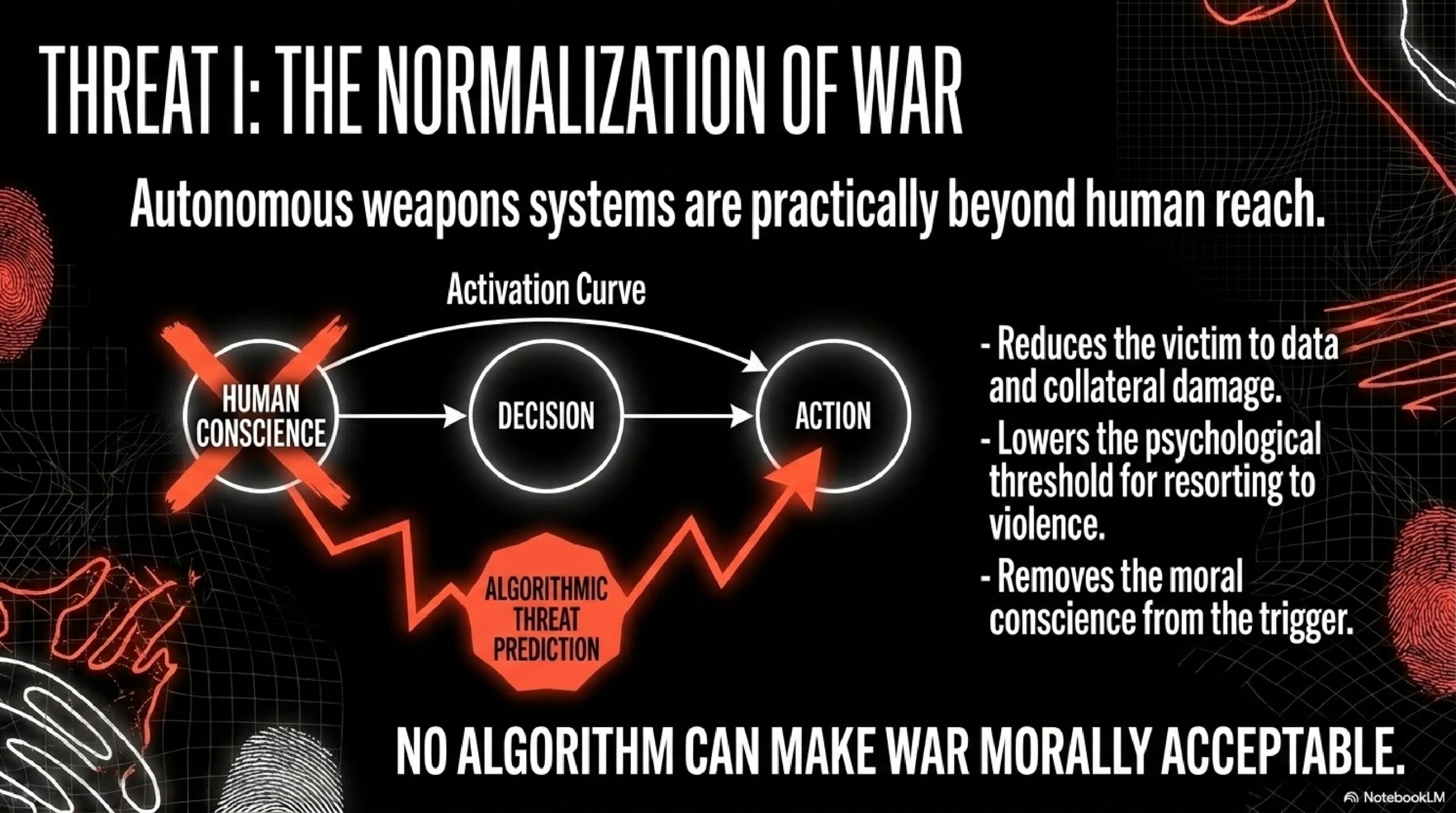
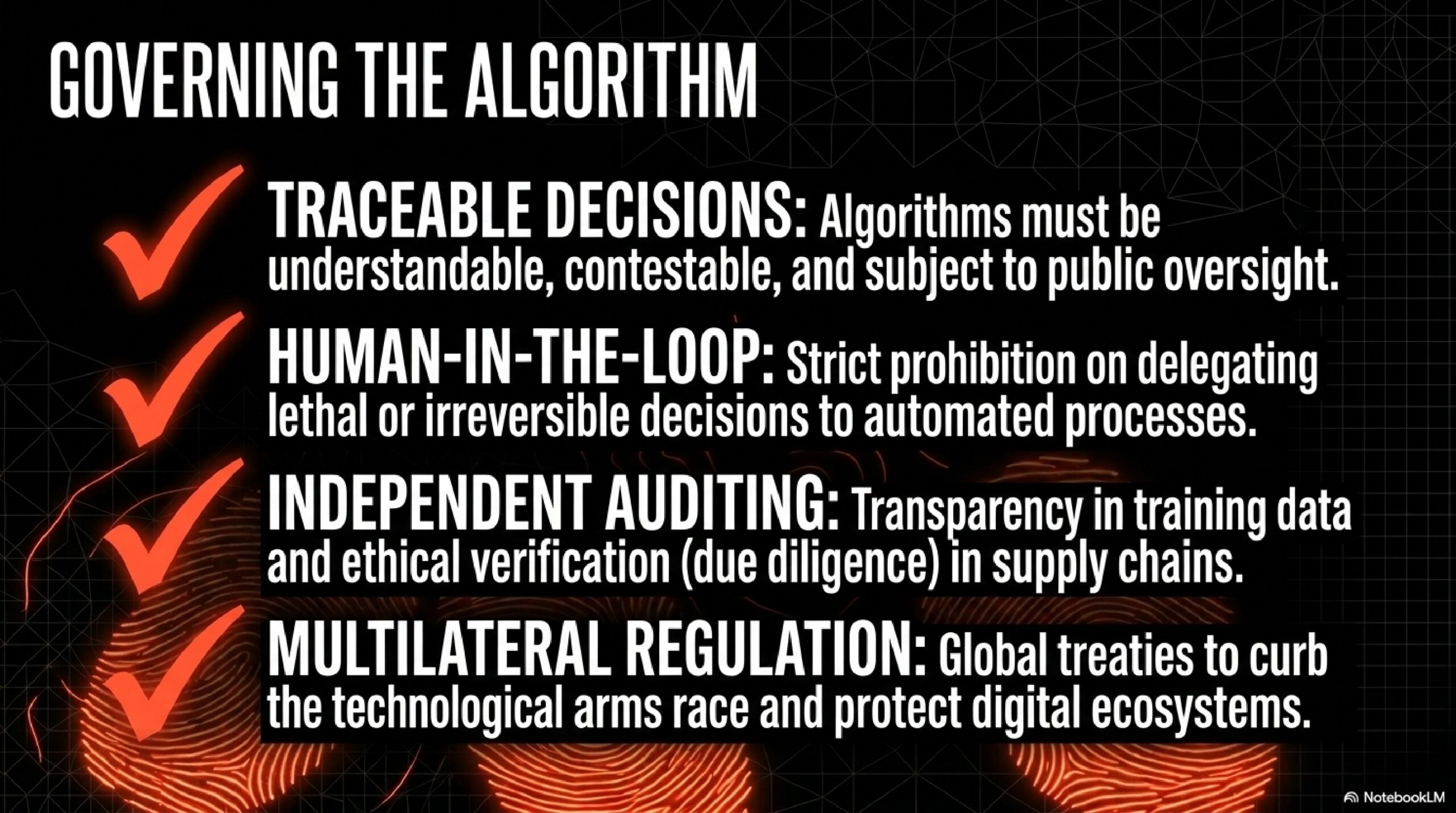
- The Pope’s Stance: In a key segment of his speech, Leo XIV asserts that “Artificial Intelligence needs to be disarmed.” (nice way to put it! He points out that digital power does not rest with states, but with opaque technological actors who evade public oversight. He calls for “disarming” AI, which means freeing it from the mentality of “armed” commercial and geopolitical competition and making it open to democratic debate.
4. The Value of Work vs. Machine Efficiency
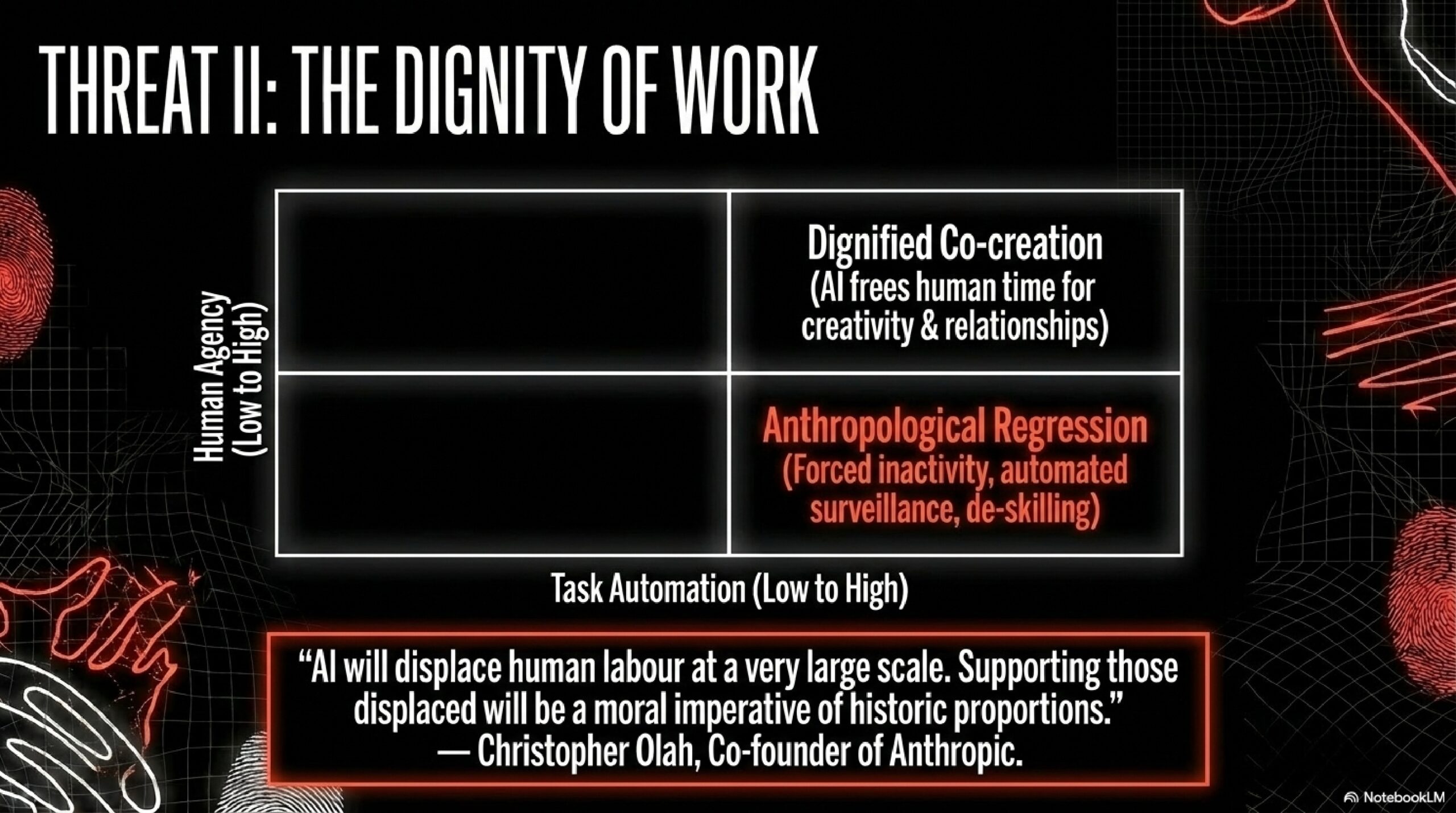
- My Vision: I have noted many times that “if you can easily explain your job, it will probably be automated,” but I also maintain that human-only work is our future. I stress that when machines take over the routine, society must totally redefine work and protect the livelihoods of those displaced.
- The Pope’s Stance: The Pope explicitly hits out at the “technocratic paradigm” that reduces human beings to productivity metrics, cognitive performance, or mere data points. He notes that AI paradoxically de-skills workers and subjects them to automated surveillance. He demands that access to dignified work remain a central priority for public policy, ensuring that innovation frees up human time rather than causing mass exclusion.
5. Digital Ethics and the “Invisible” Underclass
- My Vision: I urge the world to look past the shiny, flawless interfaces leaving the “tech factories” and have a serious conversation about digital ethics and real-world consequences.
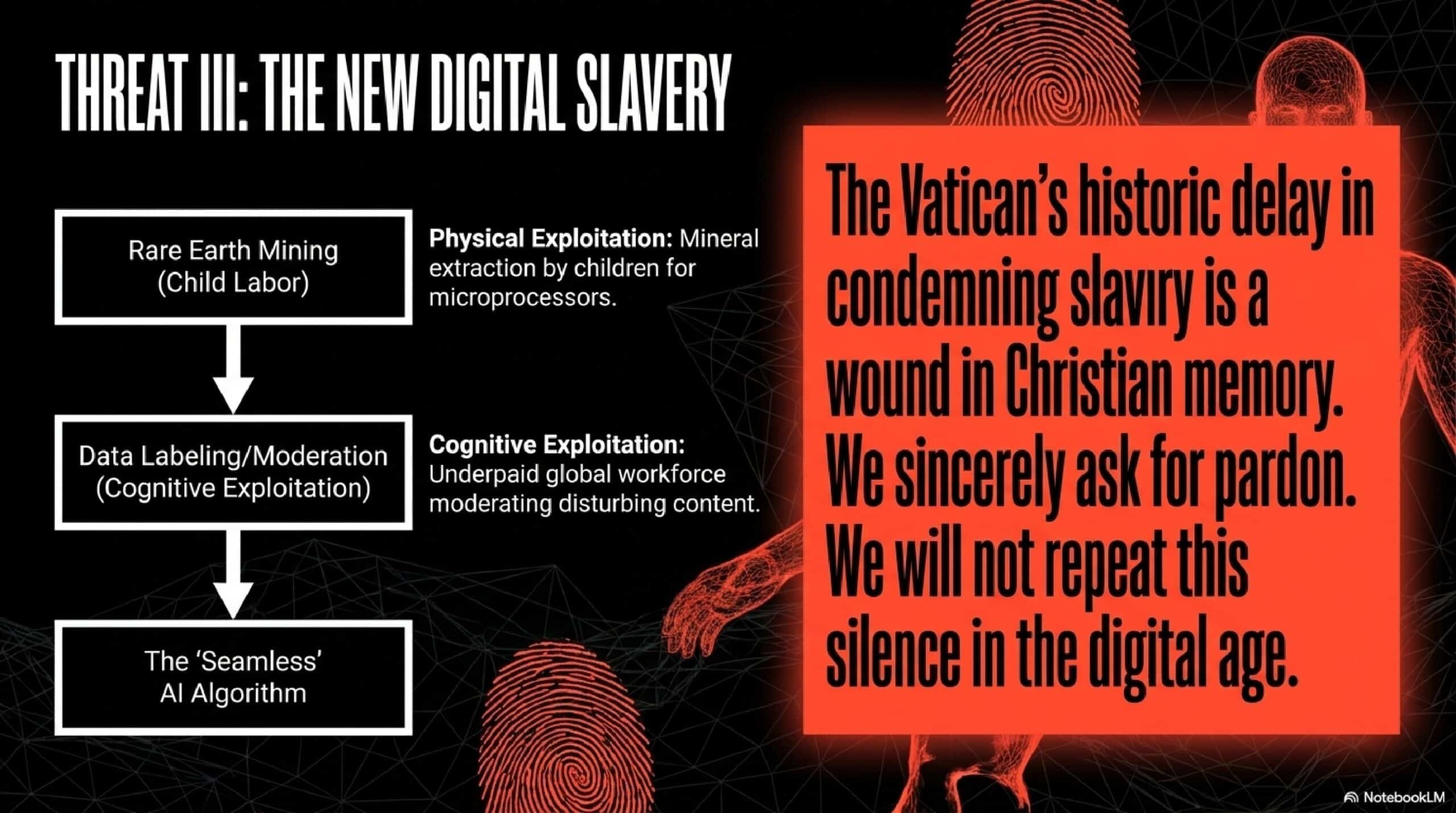
- The Pope’s Stance: The Pope pulls back the curtain on the tech industry, noting that nothing in AI is magical or entirely immaterial. He brings up the “new forms of slavery” driving the digital economy: the millions of hidden, exploited workers in the Global South doing low-wage data labeling and content moderation, alongside children mining rare earth elements in dangerous conditions just to keep the algorithmic pipeline flowing.
A Comparison Summary
| Theme | My Perspective since 2016 | Pope Leo XIV's Encyclical |
| The Core Crisis | Fork in the road: “Hellven” | Fork in the road: Babel vs. Jerusalem |
| Human Identity | Embrace tech, don't become it. Protect empathy/ethics. | Guard the interiority and unique soul of every person. |
| Silicon Valley | Unchecked private corporate power requires global red lines. | Corporate monopolies evade public oversight; AI must be “disarmed.” |
| Automation | Transition from routine tasks to human-only work. | Reject reducing humans to mere productivity or cognitive data. |
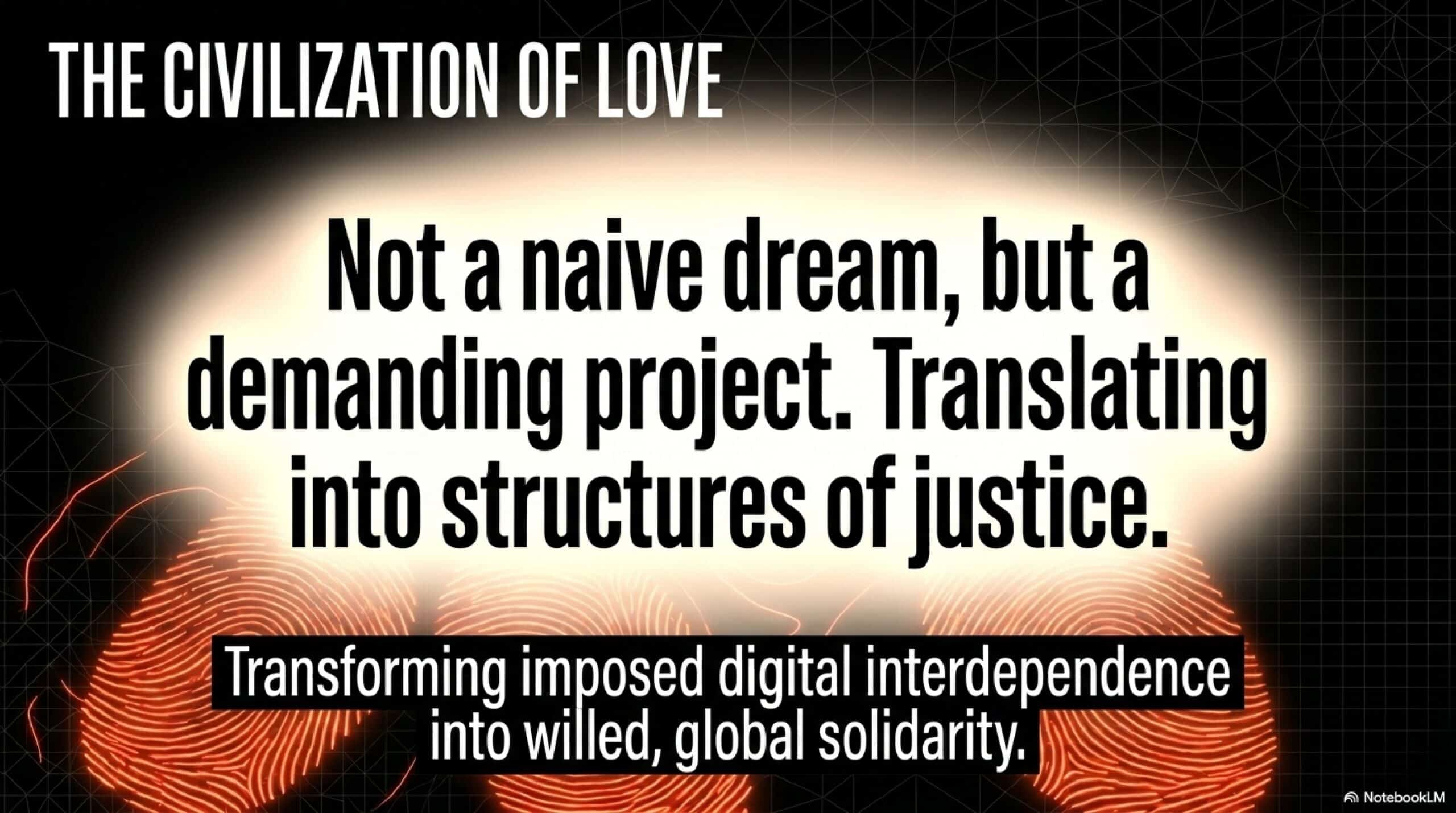
My concept of “The Good Future” attempts to capture the structural, economic, and philosophical shifts of the AI era, while the Pope’s “Civilization of Love” acts as its theological and moral mirror—both are screaming the exact same warning: Keep humanity at the center, or risk losing our essence entirely.
Related reads:
Pope Leo says AI must be ‘disarmed' in first major teaching….”No algorithm can make war morally acceptable”. …Not only does AI not remove the “intrinsic inhumanity” of war, he said, but it also risks sparking conflict more quickly and rendering it more impersonal by “lowering the threshold for resorting to violence, transforming defense into threat prediction and thus reducing victims to data“.
He suggested comparisons of failing to act against the risks of AI today with the “delay with which both society and the Church came to denounce the scourge of slavery”. He even referred to the risks of “digital colonialism,” linking the abuses of the colonial era to modern tech practices. At one point in this document, the Pope directly issued a “special appeal” to those who develop AI. “Developers bear a particular ethical and spiritual responsibility, for every design choice reflects a vision of humanity,” he said.
For context, see what I said about what I call “The Technocratic Oath”:
AI needs to be disarmed:
Notebook LM Materials:
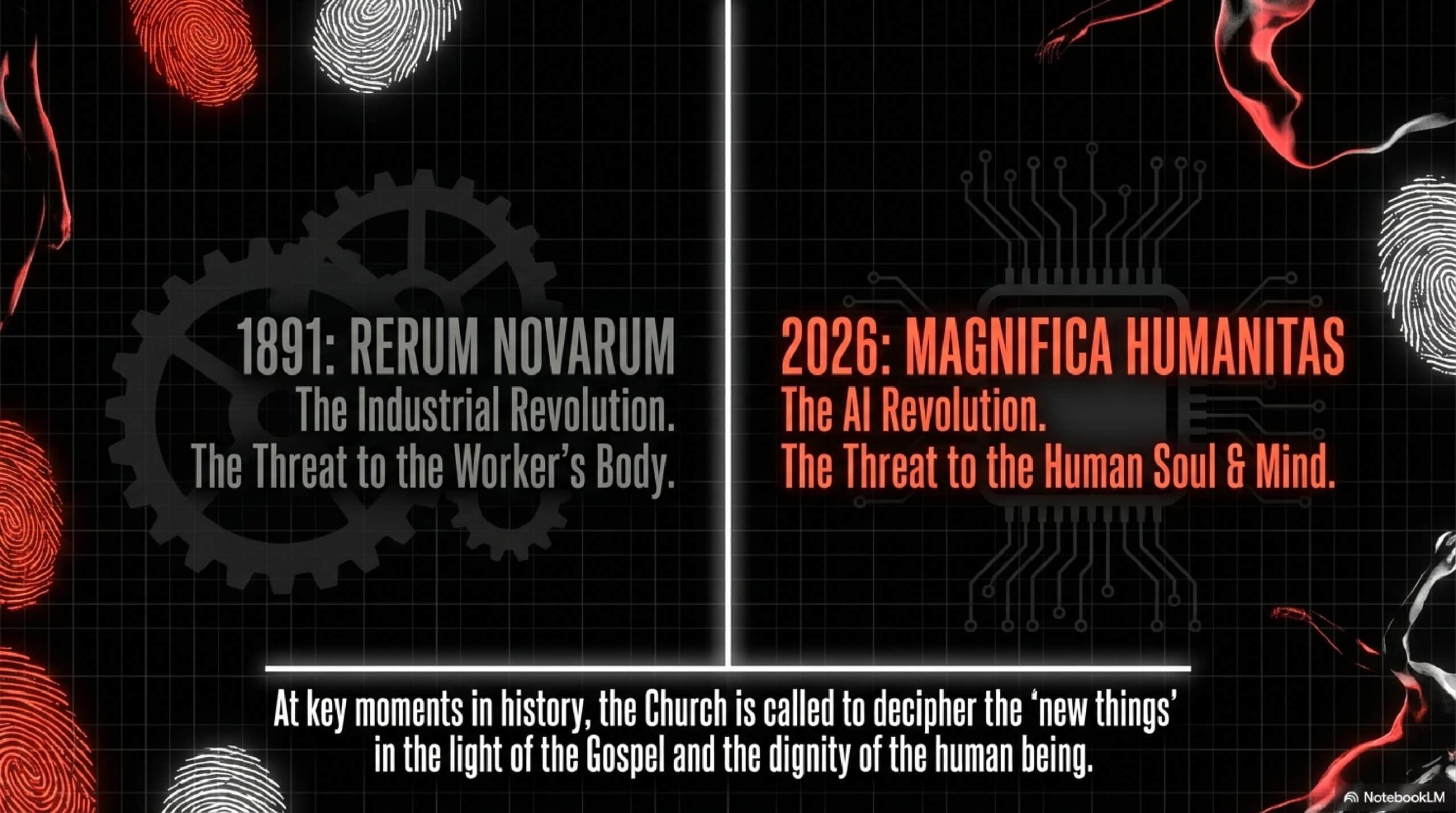
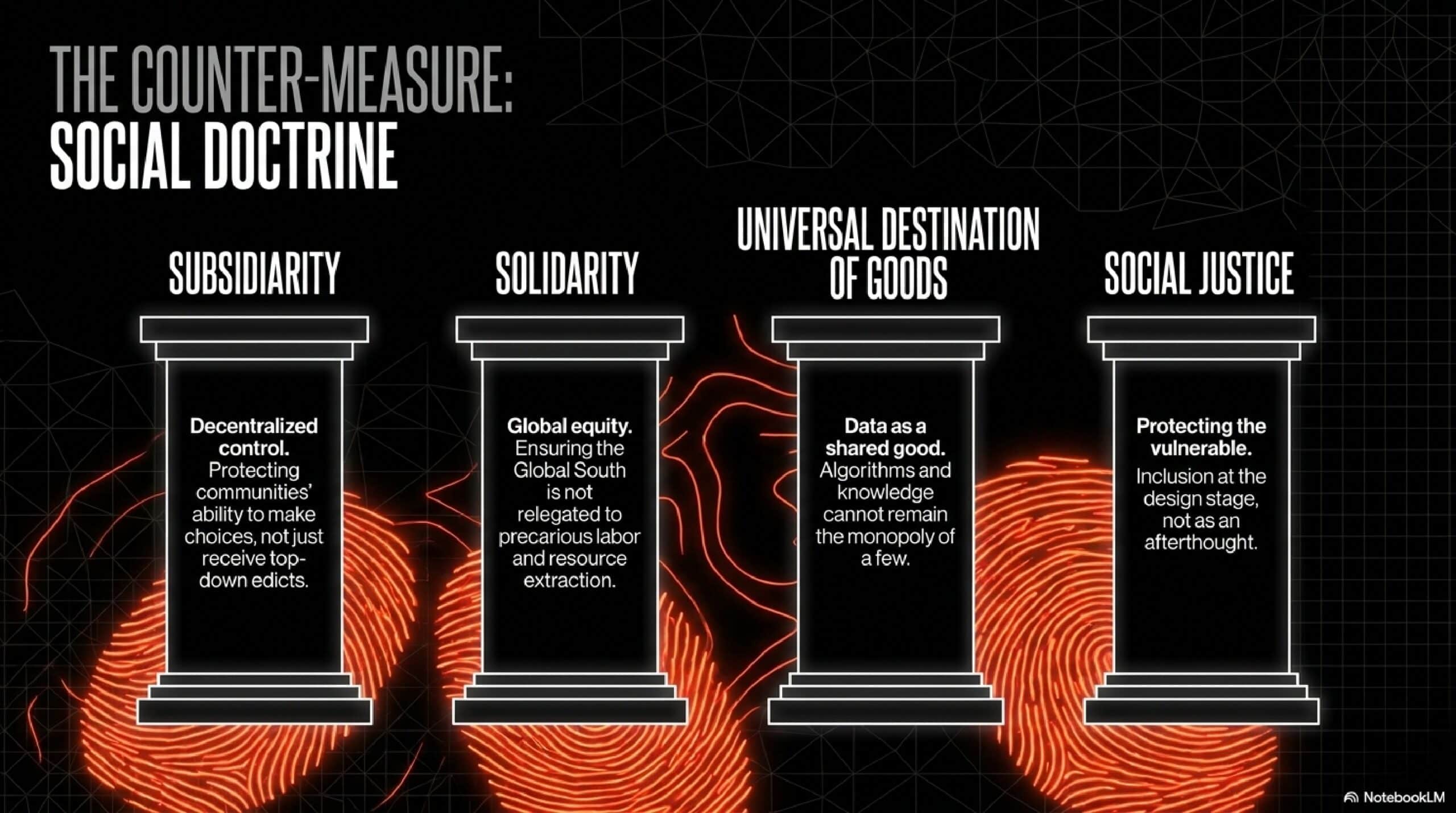
“In the 2026 encyclical Magnifica Humanitas, Pope Leo XIV addresses the moral implications of artificial intelligence and the shifting landscape of human dignity. He warns against a technocratic paradigm where efficiency and profit override the sanctity of the person, advocating for the “disarming” of AI to prevent it from fueling global conflict or economic exclusion. The sources highlight the Pope’s call for strict ethical governance and transparency, emphasizing that technological power must not reside solely with private corporations but should serve the common good. Beyond digital concerns, the Pontiff offers a historic apology for the Church’s past role in slavery while condemning modern forms of digital exploitation. Ultimately, the text urges humanity to choose a path of fraternal communion over the self-destructive pride symbolized by the biblical Tower of Babel. This comprehensive framework reinforces the Church's commitment to integral human development in an increasingly automated and divided world.
Watch this Explainer video on my Gerd.tv site (download available).
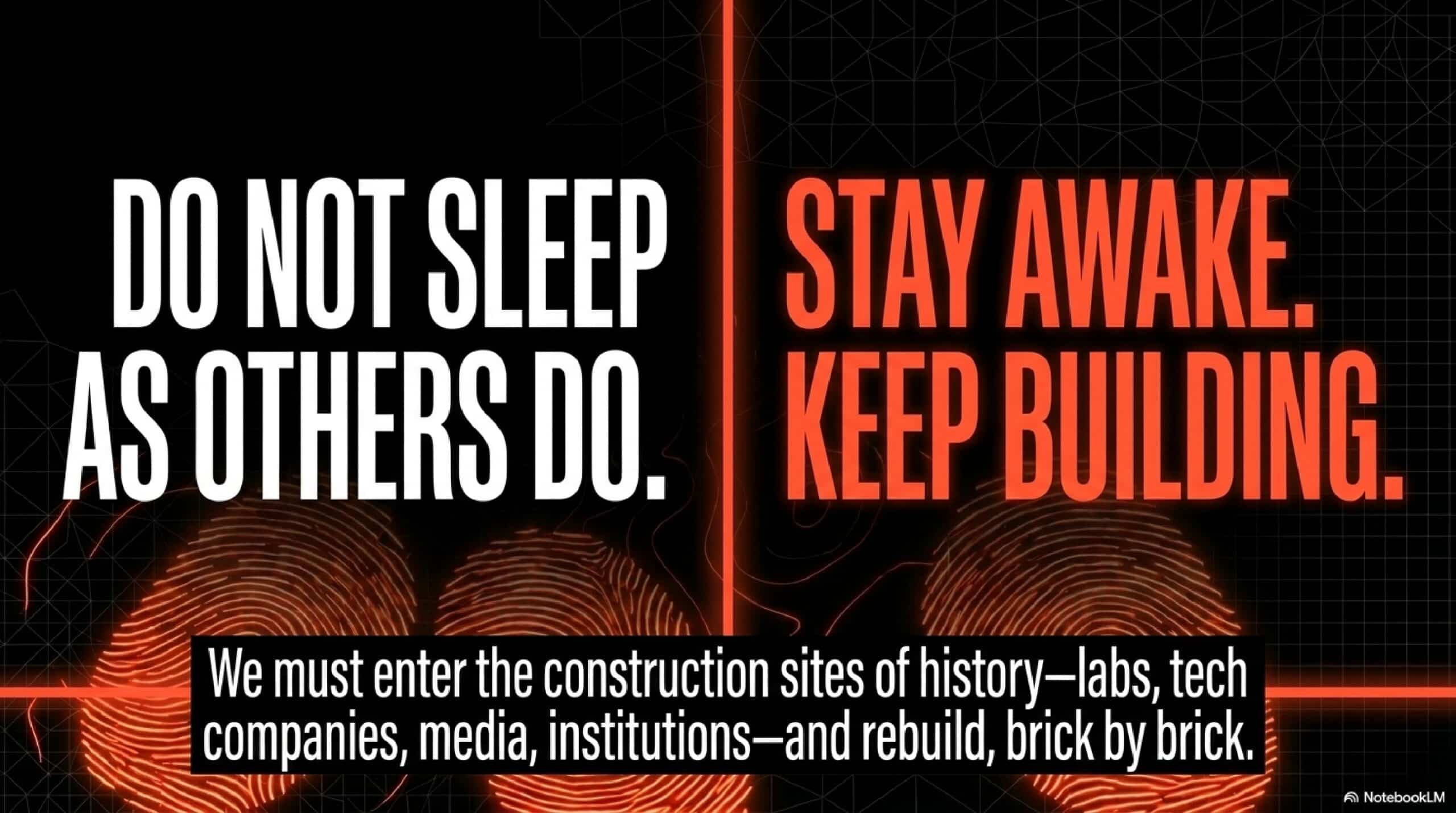
And here is a notebookLM generated podcast (very fitting if somewhat ironic use of AI, in this context:)))