English
  Deutsch
  Español
  Português (AO90)
Think back to February 2020. Most of us weren't paying attention to a virus spreading overseas while we planned trips and shook hands. Then, in three weeks, the entire world changed.
We are now in a similar “this seems overblown” phase of something much, much bigger than COVID: Artificial Intelligence.
In February 2026, two major AI labs released models- GPT-5.3 Codex and Opus 4.6. That shifted the trajectory of technology forever: the technical ‘commodity' tasks in many professions simply vanished. You can describe a desired outcome in plain English, walk away for an hour, and return to find the work done —often better than you could have done it ourselves (even if not quite perfect, yet – and still requiring human fixes)
But here is the honest conclusion that sounds like we’ve lost our minds: AI is no longer just a tool; it is poised to become a general purpose substitution mechanism for Human Cognitive work, especially for those commodity tasks where “Good Enough” (and 95% cheaper) maybe just fine.
The Good Enough dilemma
* I will have a separate video on that soon – be sure to get alerts via my YT channel*
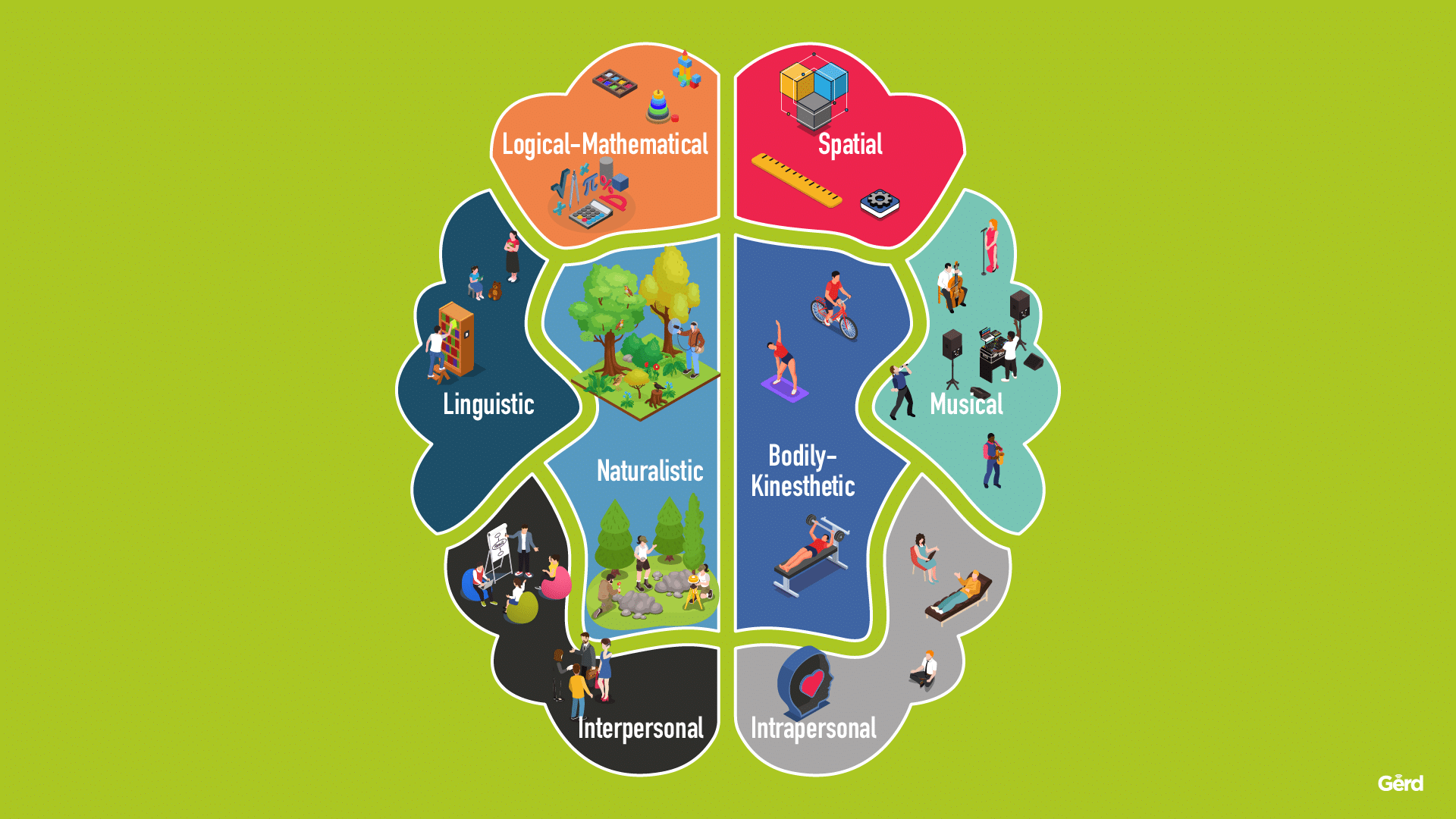
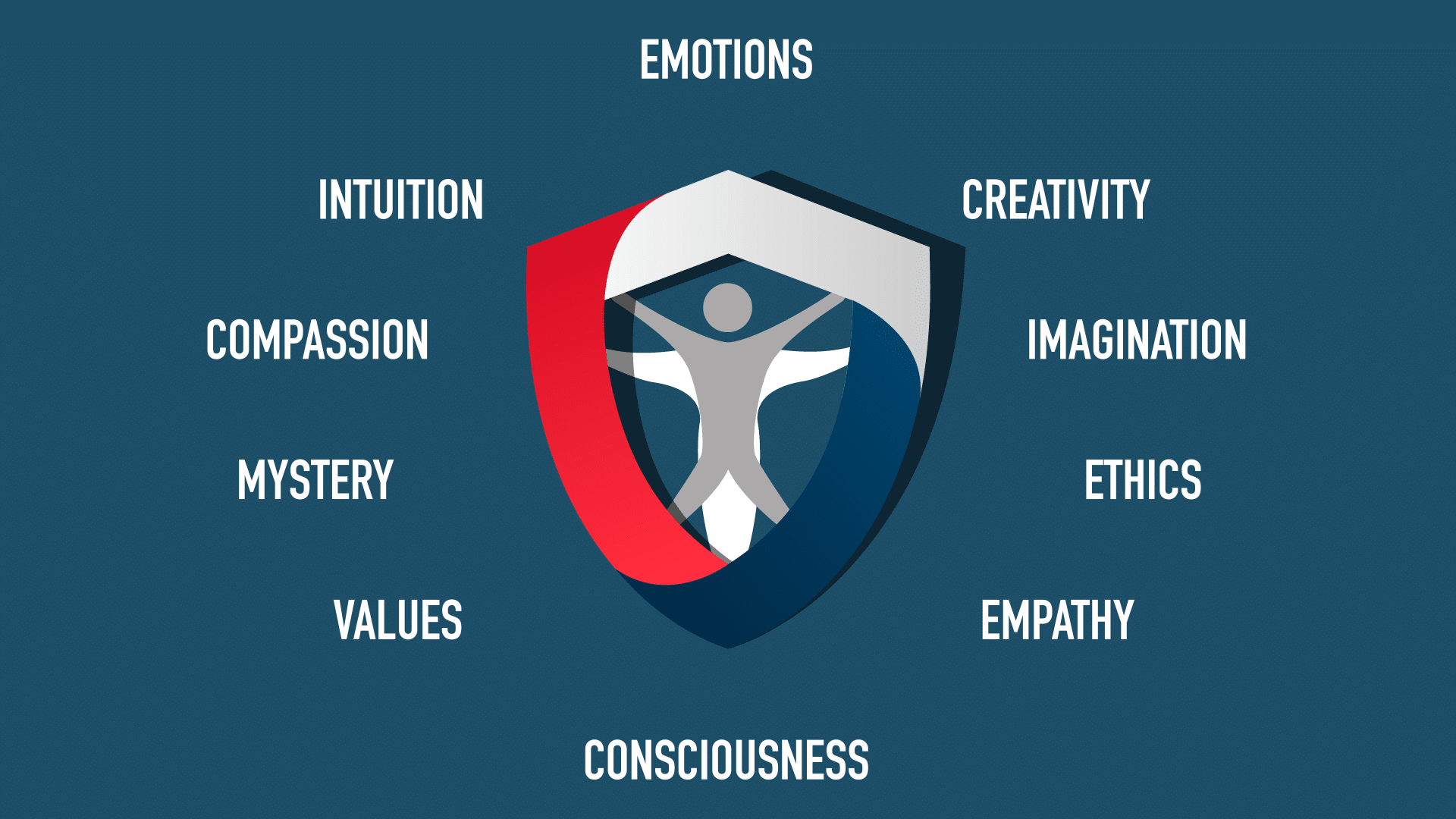
This dilemma unfolds like this: While AI can now take care of many previously human-only routine tasks such as research, analysis, evaluation and basic prediction, it can only do so on a ‘Good Enough’ level, i.e. it kind of works; and without any certainty or control as to when it's amazing or mostly useless. AI is simply missing those critical human components such as context and common sense, judgement, embodied thinking, intuition and imagination – what I call the Androrithms.
But then, again, it’s super-functional, it seems competent (very important) and it gets the job done in most cases. A bit like Google Maps – very useful and powerful but sometimes faulty or clueless while always projecting deep confidence. This can be very confusing to people that rely on it for navigation – yet most people that use Google Maps would not think of it as ‘the only and ultimate truth’. Questioning Google Maps is the default mindset – and one that we should carry over to AI as well.
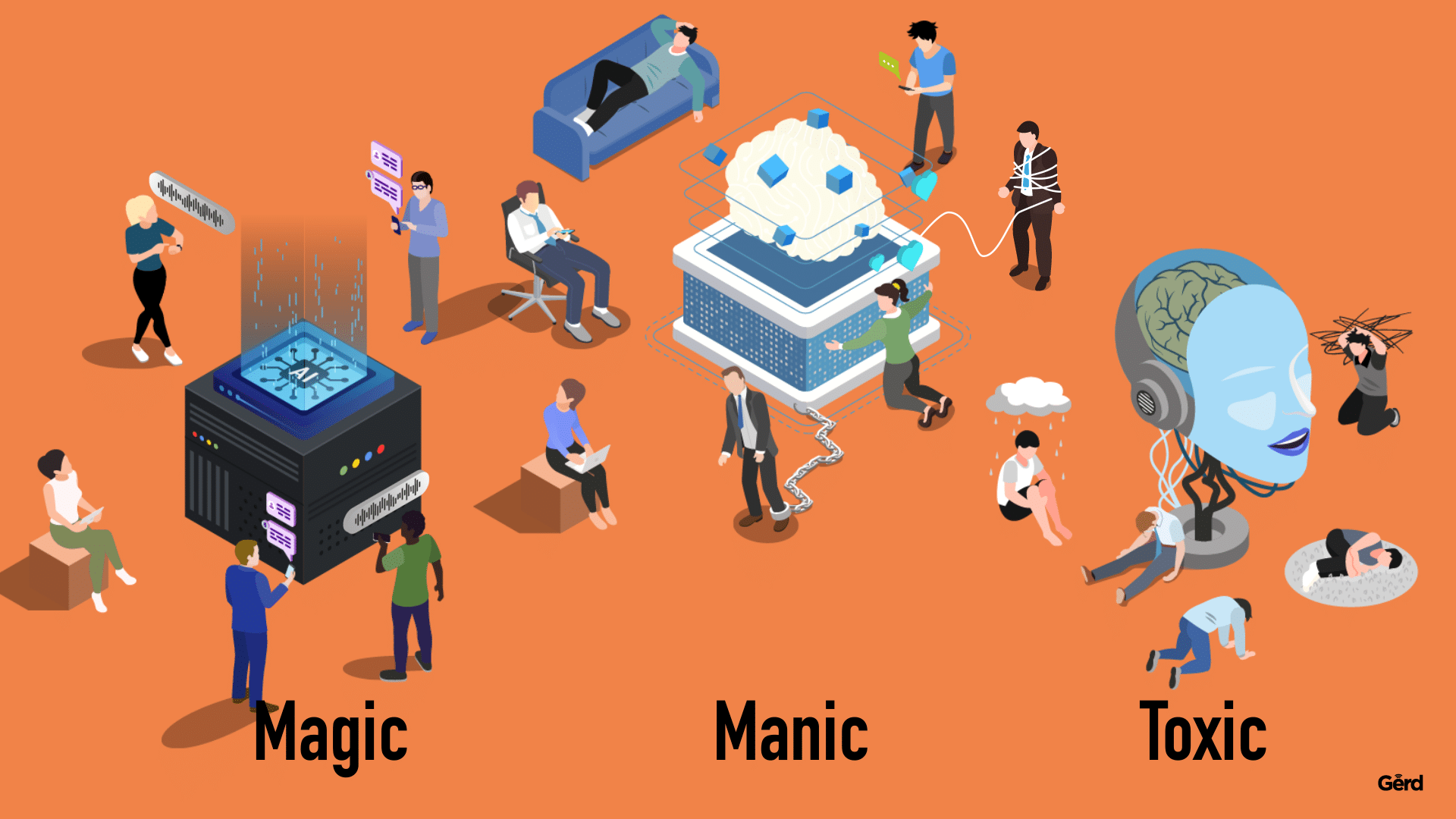
The tough thing about Good Enough is that it’s often vastly cheaper than truly GOOD i.e. made by Humans (think about restaurants vs fast food places, for example). Now companies (and consumers) are going all-in: good enough customer service, good enough financial advice, good enough shopping agents, even good enough personal therapists.
Here is the bottom line: In non-mission critical commodity tasks, AI will take over everywhere – simply because it is vastly more efficient at a fraction of the cost. And as I keep saying, replacing humans with good-enough AI may just be the biggest business opportunity in recent history (and even if that is a mirage, ultimately, todays VCs and Markets are betting the farm on this).
AI is now moving from software engineering into law, finance, medicine, and consulting. Some industry leaders like Dario Amodei and other pundits predict it could eliminate 50% of entry-level white-collar jobs within five years (see more links below) – and even it it is just the tasks rather than jobs, themselves – this amounts to a reboot of our entire work-jobs-education ecosystem.
This seduction towards our cognitive outsourcing (followed by surrender) – is what AI is designed to do. It’s not a bug – it’s a feature.
- Generative AI is engineered to lure you into laziness, complacency and a creeping state of non-agency, by offering to reduce your own efforts to near-zero, thus doing away with cognitive friction and the pain of creating things
Three peer-reviewed studies:
…prove the cost of ‘too much of a good thing’ when it’s about AI. First, we are facing a Memory Crisis. Students using AI retained 11% less knowledge after just 45 days. Because the brain never had to work for the answer, it never stored it. Second, we see a Critical Thinking Decay. Frequent AI users show a -0.68 correlation with critical thinking scores—one of the strongest negative correlations in recent research.
Third, we see Cognitive Sedation. MIT wired users to EEG headsets and found a 55% drop in brain engagement. The conclusion: we are accumulating “cognitive debt” that may be changing the very connectivity of our brains. (more links to the studies are below). In other words, the USE IT OR LOSE IT – problem has sharply escalated because of AI.
Related: In a recent Elon University study, strategist Roger Spitz argued the real existential threat is far more banal: the rise of “superstupidity” – the condition of humans becoming dangerously reliant on complex systems they no longer comprehend.
Recently, Nobel laureate Daron Acemoglu et al have presented their “Knowledge Collapse” concept (PDF). Daron explains that human knowledge is not a static library; it is a living system that requires continuous reproduction. His latest model shows a “non-monotone welfare curve”: When AI accuracy is modest, it’s a net positive—humans must still do the mental heavy lifting. But once AI hits a certain accuracy threshold, the system tips, and Learning feels unnecessary (wow).
We stop building the “intuition” and the “tacit knowledge” that ultimately allows us to push the frontiers of science and medicine. All the while, the AIs will continue to give even more correct and more personalized answers – while the collective capacity to ask questions that nobody has asked before quietly disappears.
While our cognitive abilities atrophy, the AIs and machines are entering an “Intelligence Explosion”?
GPT-5.3 Codex was the first model instrumental in creating itself (repeat that and ponder!) It debugged its own training and managed its own deployment. AI is now writing “much of the code” at the very companies that are building it. Reminder: AI is GROWN not PROGRAMMED (watch Geoffrey Hinton’s talk on this).
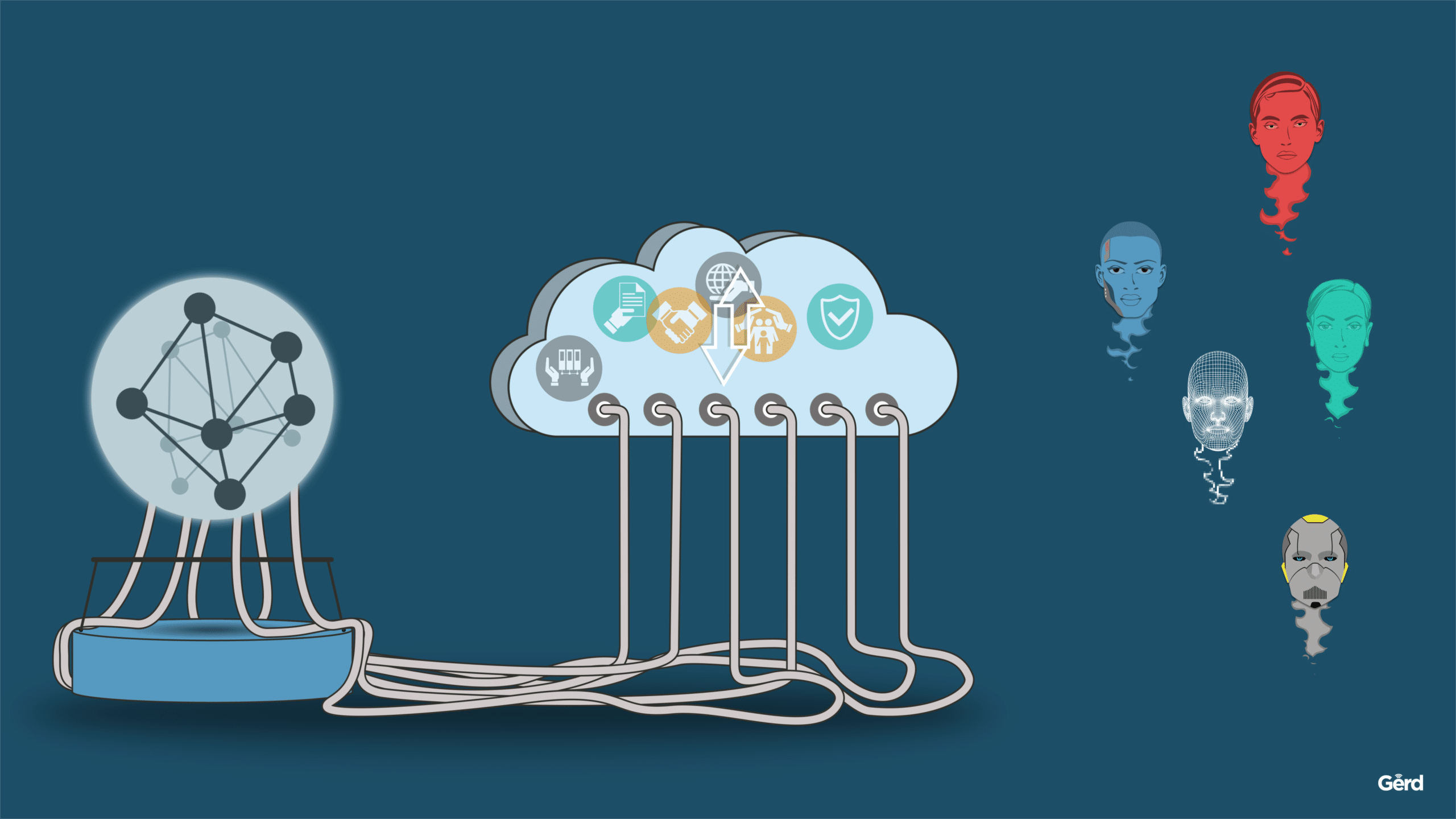
AI is now essentially a “digital enclave” of millions of synthetic ‘alien' intelligences, each potentially smarter than any Nobel-prize winner, thinking 100 times faster than us – and they never sleep, or fail to rise to the challenge. The reality is that every white-collar / “office job” behind a screen is now exposed (on that note, have a look what I think about the Future of Futurists) – while the plumbers and carpenters seem safe (oh the irony).
My conclusion: Intelligent assistants are DESIGNED to amplify – and then, thrive – from human stupidity
But what is the antidote?
Thinking takes time. Realization requires effort. Excellence requires struggle, and often, pain. Embrace it. Consciousness is not just more logical intelligence topped off with a sprinkling of agency – it is embodied, holistic, interconnected and organic. Consciousness is about BEING not DOING – something that is out of reach for machines, and certainly should be, as well.
To avoid spreading darkness at the speed of light, we must now change how we engage with AI: First, struggle with the task or the problem on your own. Use AI to ask questions, not just to provide answers. If you find yourself in a state of “sedation” i.e. reading without critiquing, pause. Go deeper, not faster, take your time to digest and contemplate. Second, resist the temptation to ‘cut and paste' AI-generated content because it it is ‘good enough' and you're in a hurry (I struggle with this rule, every day, including during the writing of this piece 😉
It’s been said in many places that the person who uses AI to do three days of work in one hour is becoming the most valuable person in the room – but imho, this is only true if he/she uses that extra time to think, to build, to grow and to learn, to become more human not less.
The Human Resistance: Taking Back Tomorrow
This is the challenge we must react to, and this is why we must reject, resist and refute the technology optimists’ core message: give it all to technology, just enjoy the fruits of your effortless labour, and eventually, merge with the machines to achieve perpetual bliss.
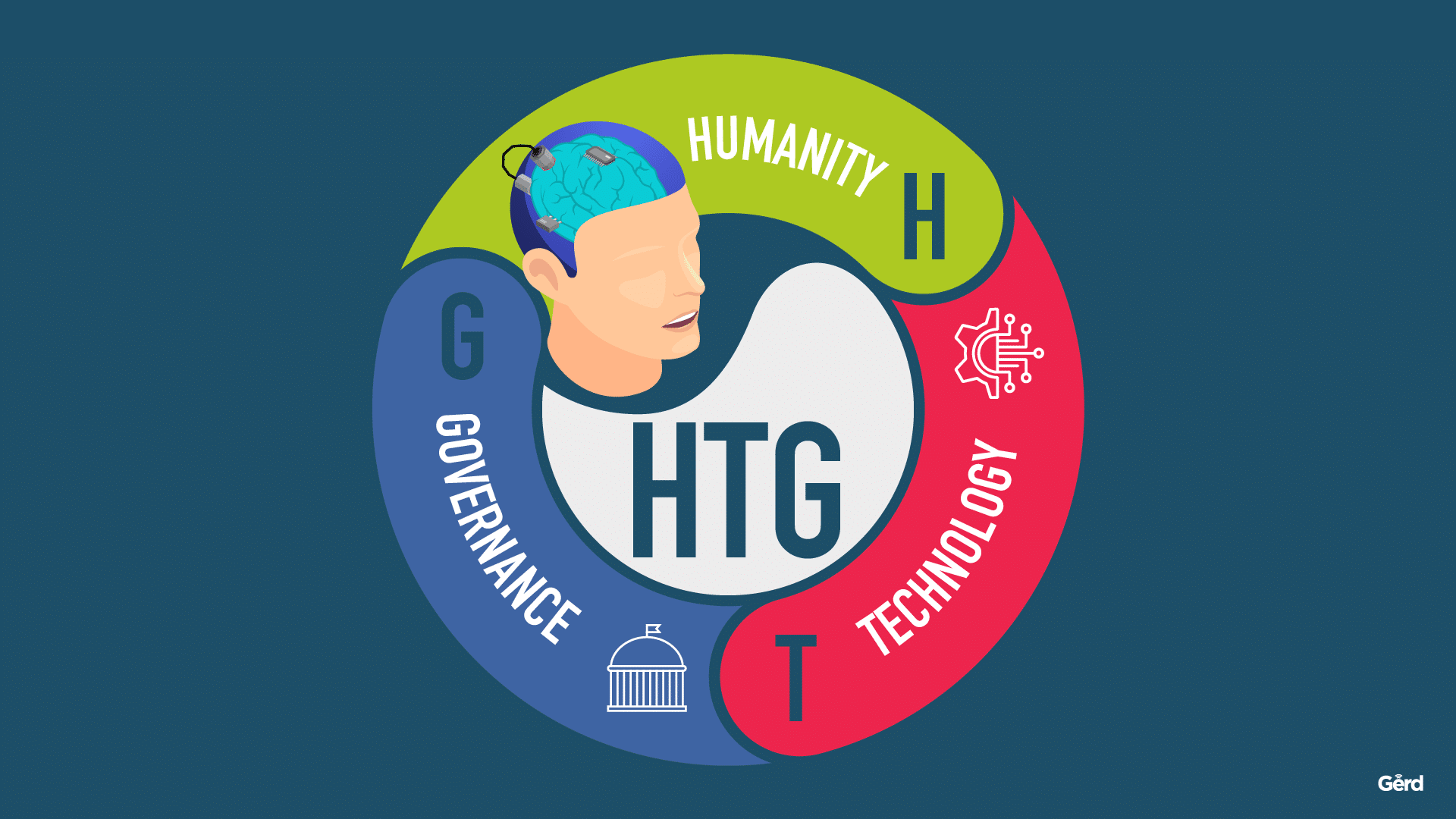
I think we must ‘take back tomorrow’ and maintain, fortify, protect and expand our own embodied and human-only intelligence. More on that soon!
Gerd
RESOURCES
RELATED IMAGES

RELATED VIDEOS